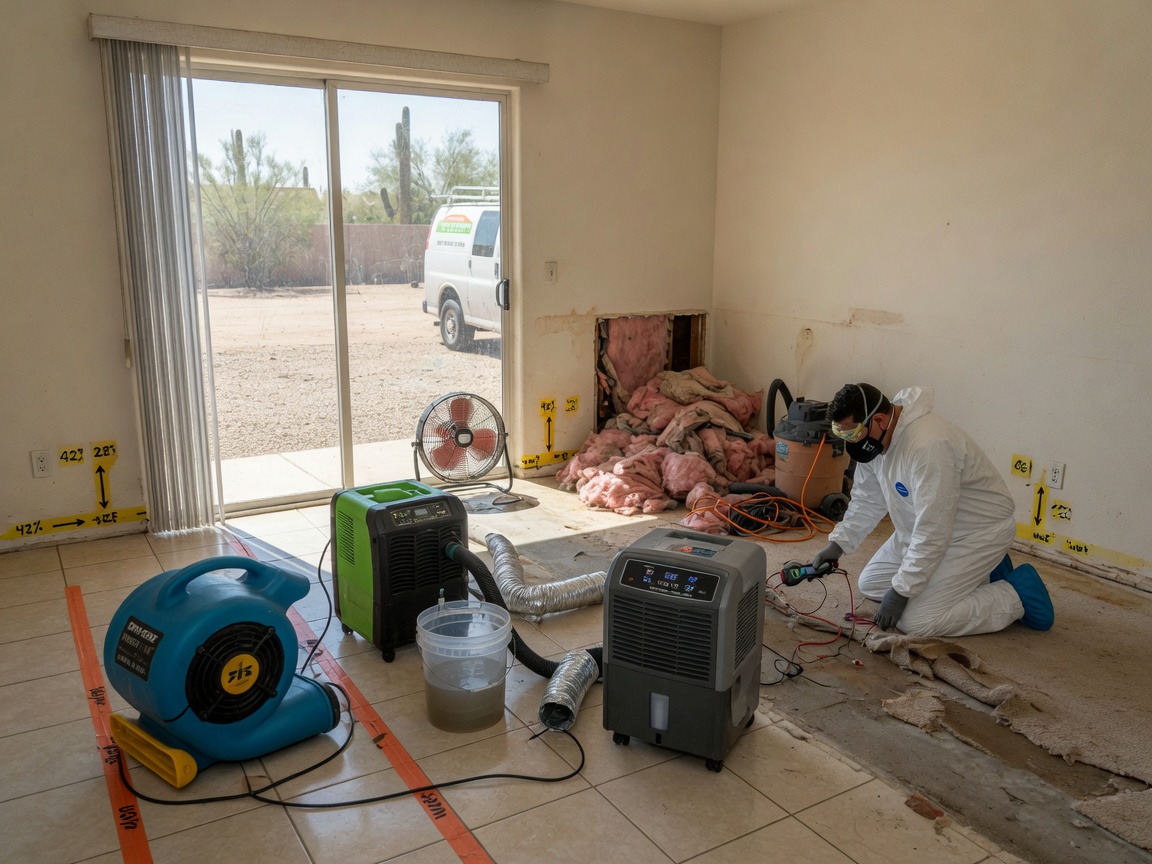
Structural drying is where a water loss is either finished properly or left to become a mold job. The surface dries quickly in this climate and that is exactly the trap. Framing, bottom plates, sub-floor and the inside face of drywall hold water for days after the room feels normal, and in a slab house the water travels sideways rather than pooling where you can see it.
Equipment goes in by calculation rather than habit: air movers along the wet wall length, dehumidification against room volume, and containment where a room needs to be isolated. Then we come back with a meter, every day, and record what it says. On a manufactured home the equipment goes underneath as well, because that floor will not dry from the top.
The material is dry when it matches an unaffected piece of the same material elsewhere in the same building. That comparison is the standard, not a fixed number of days on a schedule. Drying follows straight on from water removal, usually the same visit.
Technician insight
Outside air here is so dry for most of the year that ventilation does real work for free. That advantage disappears in monsoon season, and a job that would take three days in April takes five in August.
Structural Drying Services We Offer
✓Wall and Cavity Drying
Cavities dried through small access points so drywall stays up where possible.
✓Floor System Drying
Mat systems and negative pressure for tile, laminate and wood over slab.
✓Written Drying Logs
Daily readings recorded by room and date, shared with you and your insurer.