2026-08-17T14:03:15.563Z ·
Water Damage In A Manufactured Home: What Can Be Saved
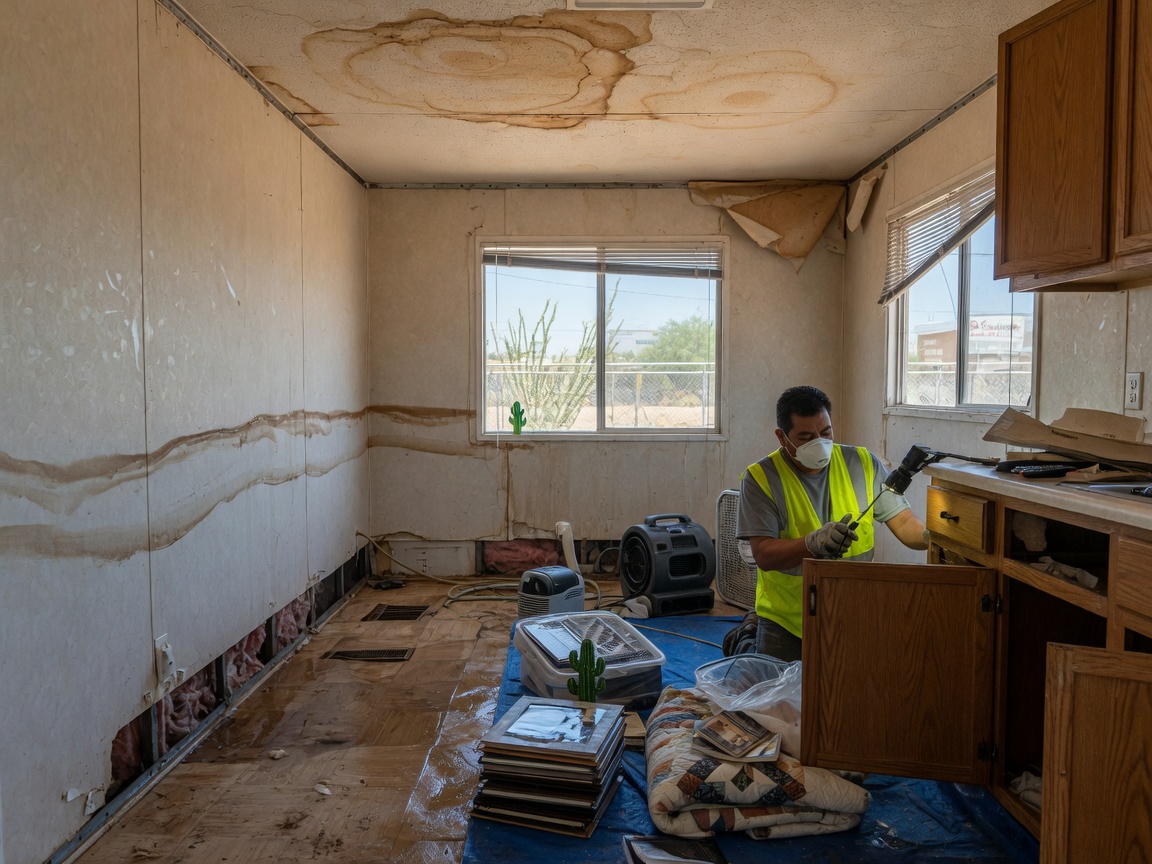
A manufactured home floor is a sandwich. Decking on top, insulation in the middle, and a plastic belly wrap underneath holding it all together. That wrap is designed to keep pests and dust out, which means it also keeps water in.
When water gets into that assembly it does not evaporate upward through vinyl or carpet at any useful rate. It sits in the insulation with the wrap holding it there, and the decking, which is usually particle board, absorbs it and starts to lose strength. A homeowner running fans across the floor for a week can watch the surface go dry while the layer below is untouched. This is the one job where standard structural drying has to be done from underneath as well as inside.
Drying it properly means going underneath and opening the belly wrap at the low points so the water actually leaves, then moving air into that cavity and metering the decking rather than the floor covering. It is more work and it is the only approach that saves the floor. Getting the water out fast matters more here than anywhere else.
What can be saved depends on hours more than volume. Caught in the first day or two, most floors dry and stay serviceable. Water that sat for a fortnight has usually taken the particle board past the point where drying helps, and the honest answer is replacement of that section, often with mold remediation alongside it because a sealed wet cavity in Arizona heat grows quickly.
Two things every manufactured home owner in Arizona City, Stanfield or Toltec should do. Know where your shutoff is, because on these properties it is often at the meter or the pressure tank rather than inside. And walk the underside once a year looking for a sagging or torn belly wrap, since a wrap that is already open will tell you where water has been long before you notice inside.
For an honest assessment of what your floor can take, call (520) 679-8658 and we will look at it from underneath.