2026-08-25T14:03:15.563Z ·
Evaporative Coolers Leak In July: What It Does To A Casa Grande Ceiling
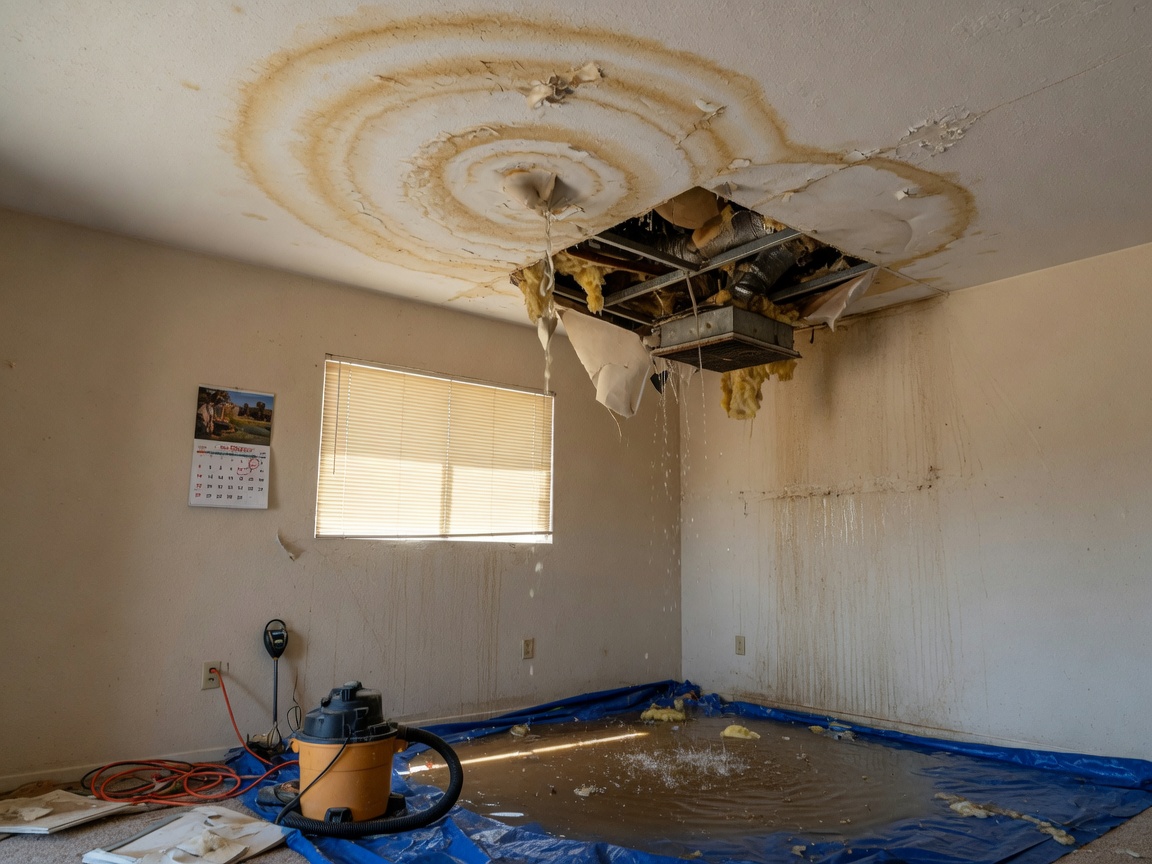
Roof-mounted evaporative coolers are still working away on plenty of houses around Casa Grande, Coolidge and Toltec, and every summer a number of them put water into the ceiling below.
The failures are boring and predictable. A float valve sticks open and the pan overflows. The pan itself rusts through at a corner. The supply line to the unit fails at a fitting. In every case the water lands on the roof structure directly above your living space and works down through the insulation into the ceiling drywall, which is the cleanup we do most through July and August.
What makes this worse than a comparable leak at floor level is the attic temperature. In July that space runs past 140 degrees, and wet insulation in that kind of heat grows mold in a couple of days rather than a couple of weeks. By the time a stain is visible on the ceiling, the material above it has usually been wet for a while, so testing comes before any patching.
The signs to act on: a stain that is growing, a ceiling that feels soft, a musty smell in one room, or a light fitting with water marks around the base. That last one is also an electrical hazard and it means the power to that circuit goes off before anyone investigates.
Not every ceiling stain is the cooler. Rain driven under the tile edge in a monsoon storm produces an almost identical mark, and that one shows up days after the storm. A meter and a look in the attic separates them quickly.
Spring is when you prevent it. Before the season starts, get on the roof or have someone look at the pan for rust and check that the float shuts the water off cleanly. A cooler tech will do it in a service visit, and it costs a fraction of a ceiling repair. If you rent, report it in writing the day you see it, for the reasons set out here.
If the stain is already there, do not paint over it. Get a meter on it first: (520) 679-8658.